Operation Open Heart Cardiac Awareness Campaign and Survey
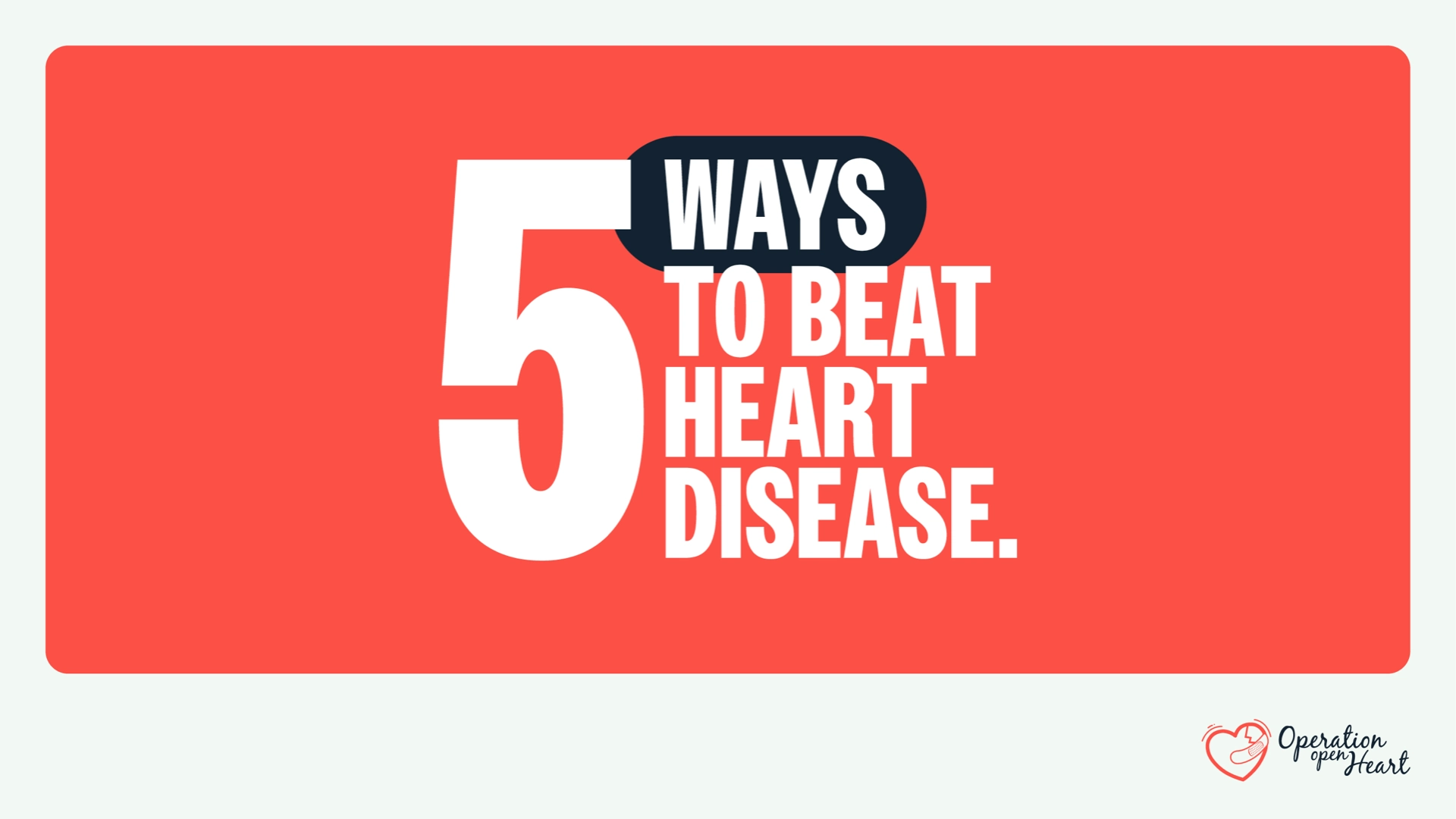
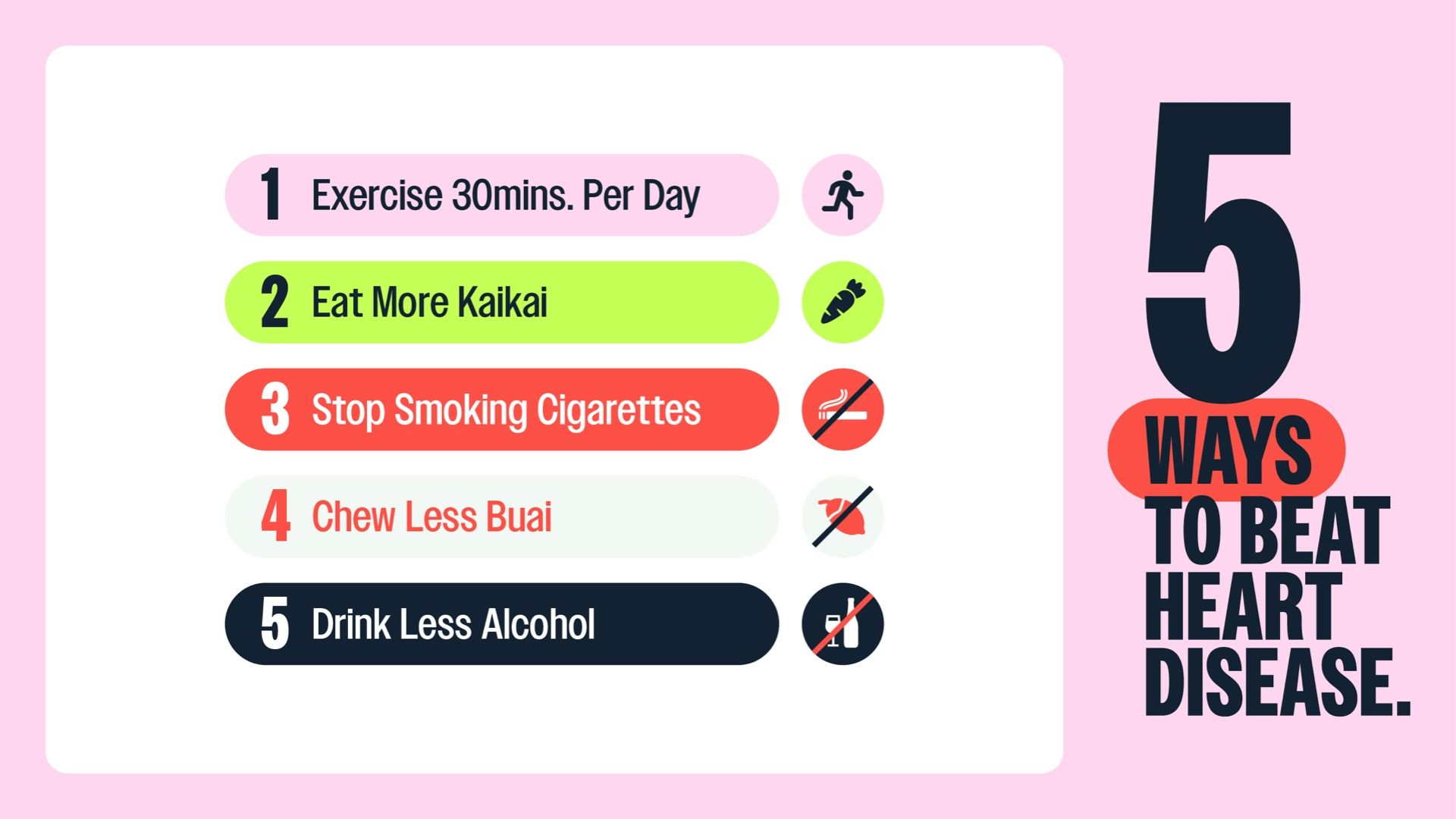
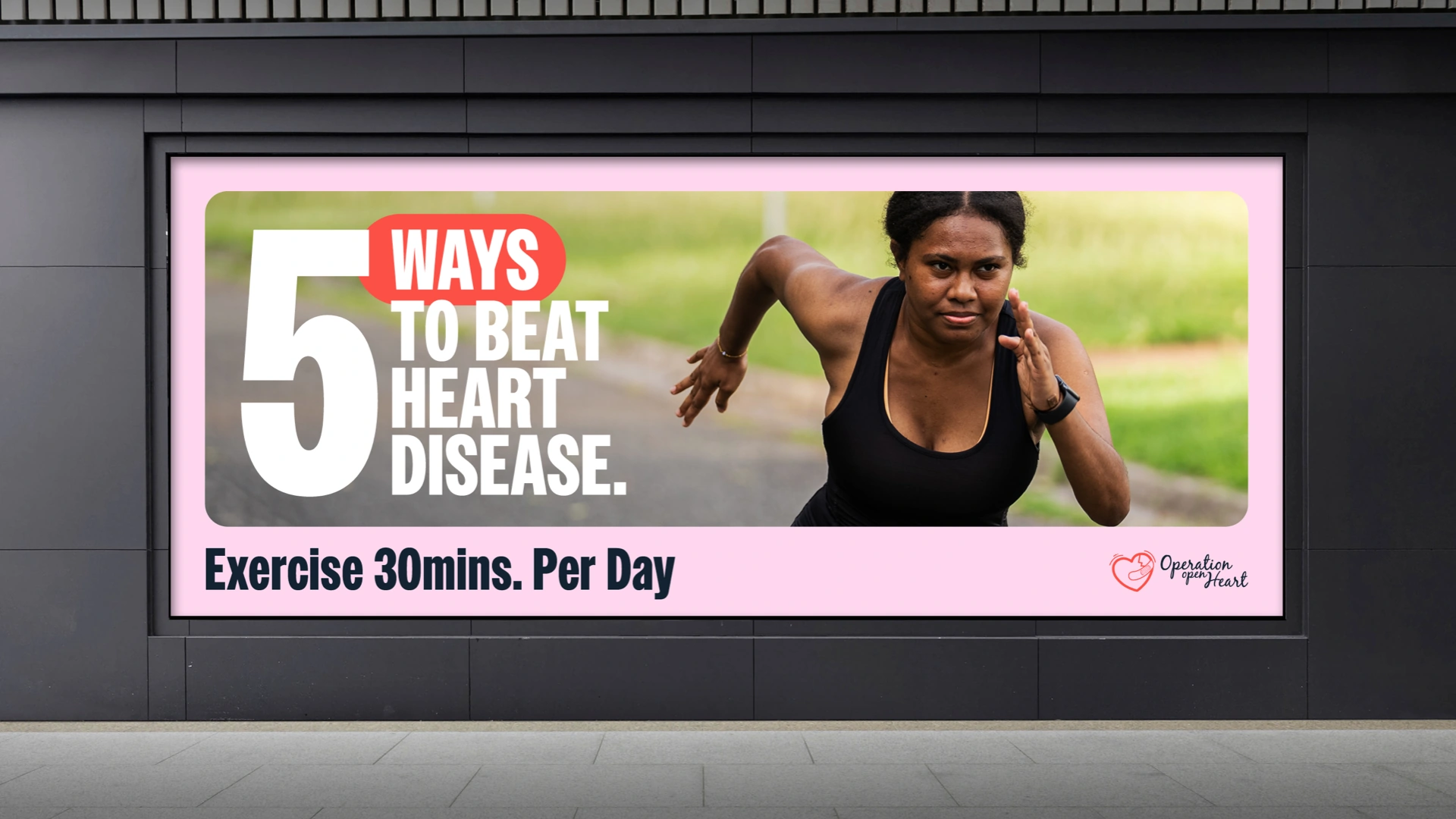
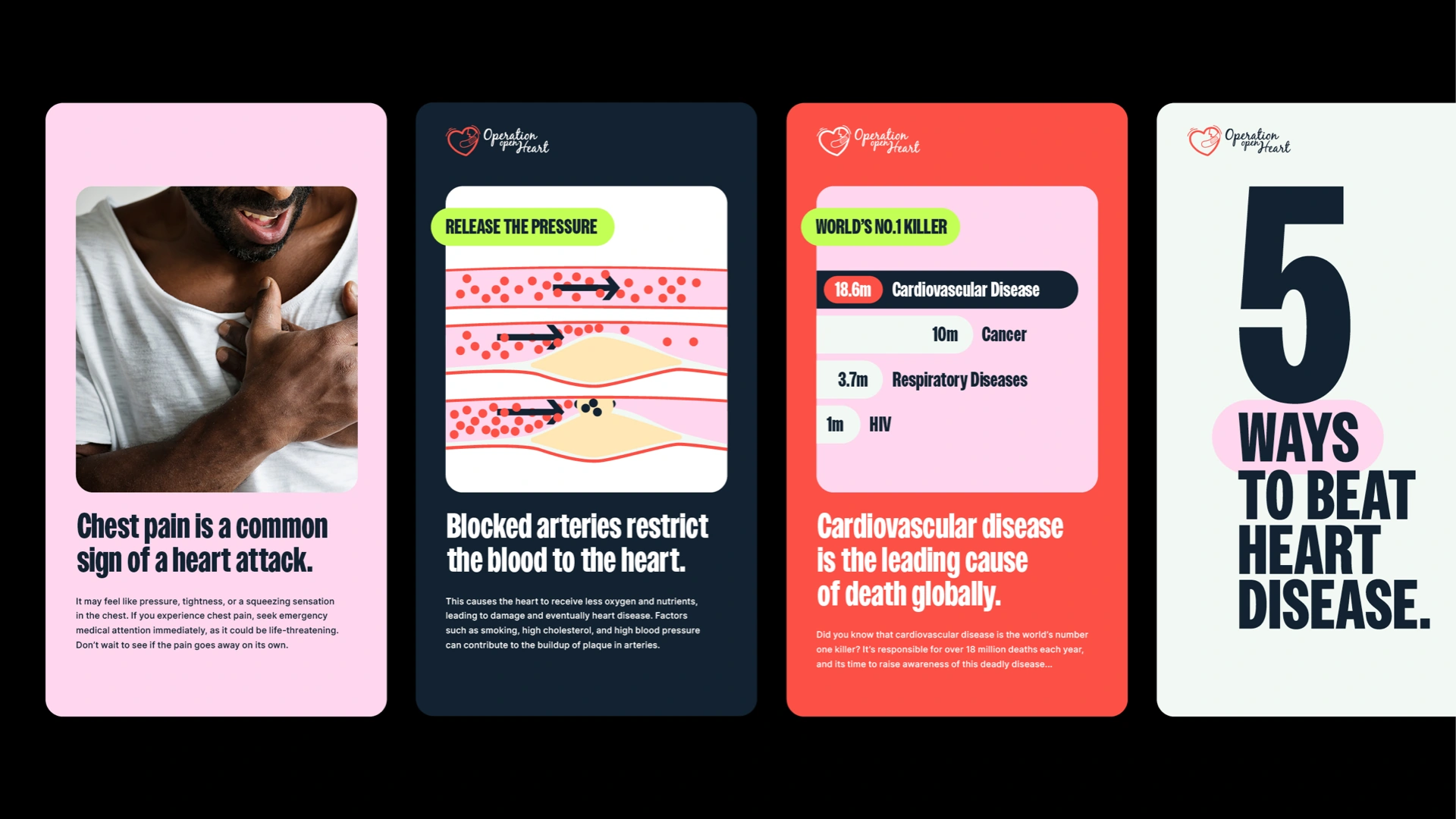
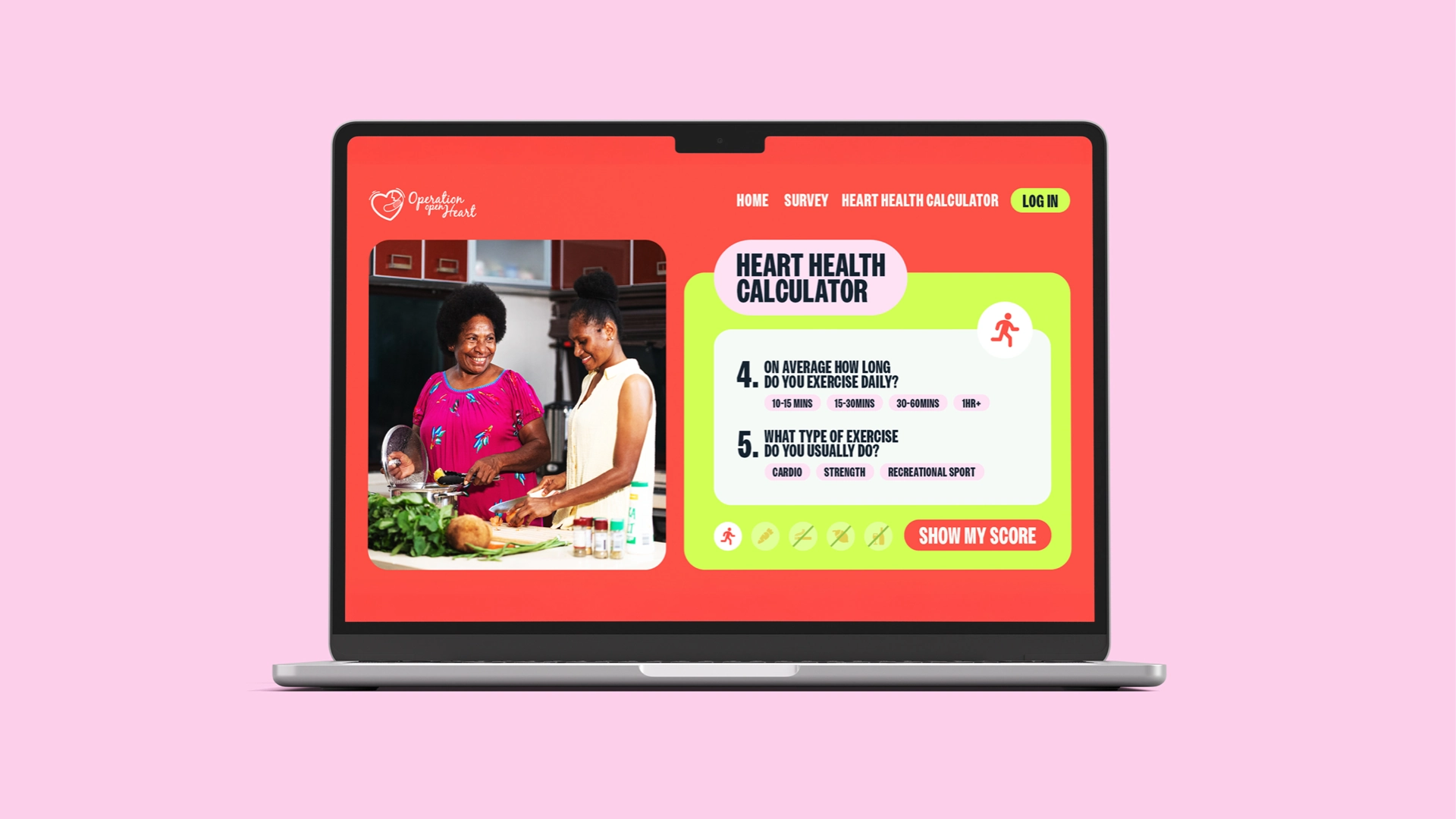
Heart disease is PNG’s number one killer. Operation Open Heart came to us with a brief that mattered: make heart health impossible to ignore. We built a campaign from the ground up, starting with real research across four provinces, then translating the findings into one clear, actionable message. Five things you can do today to protect your heart.
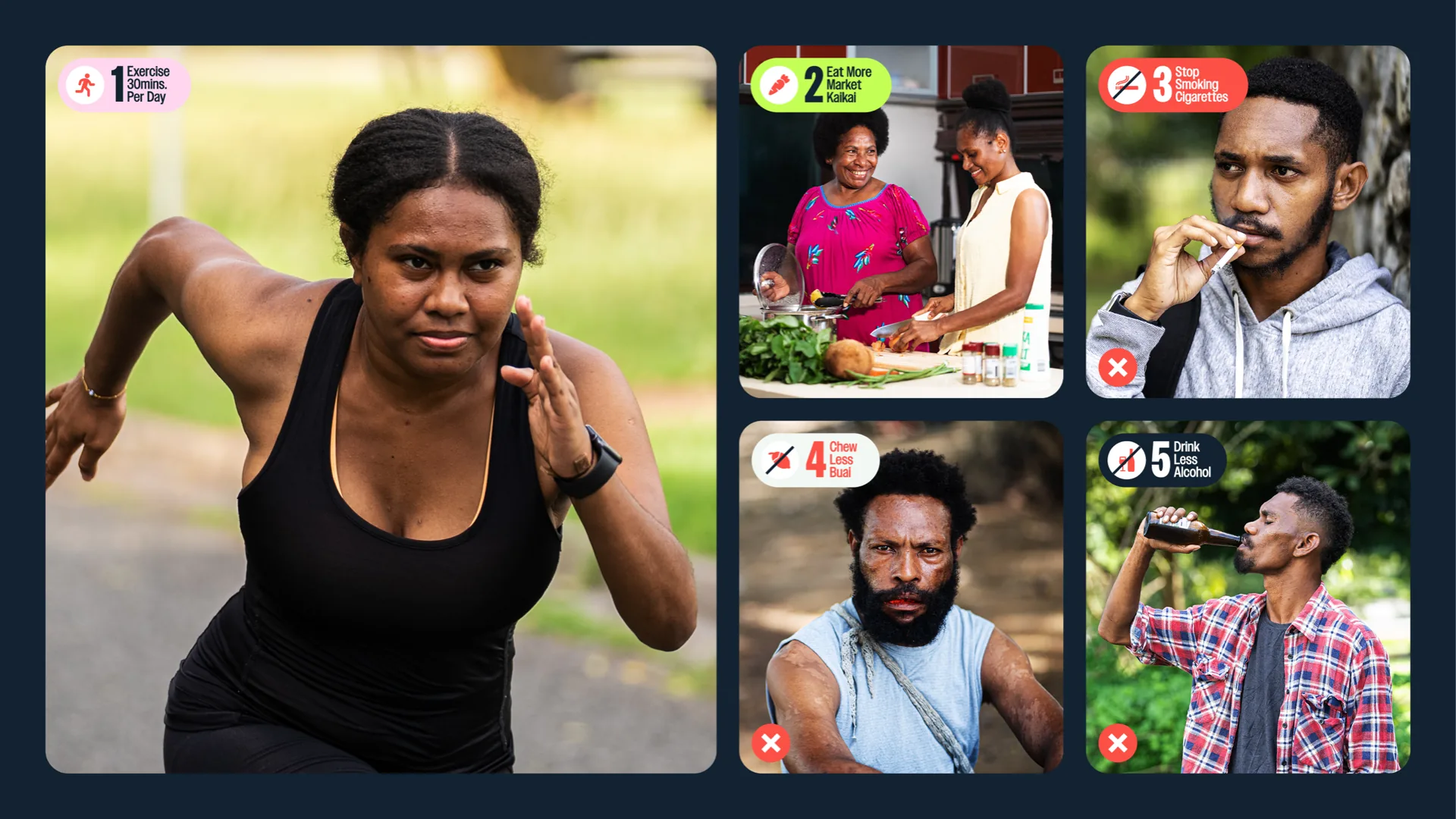
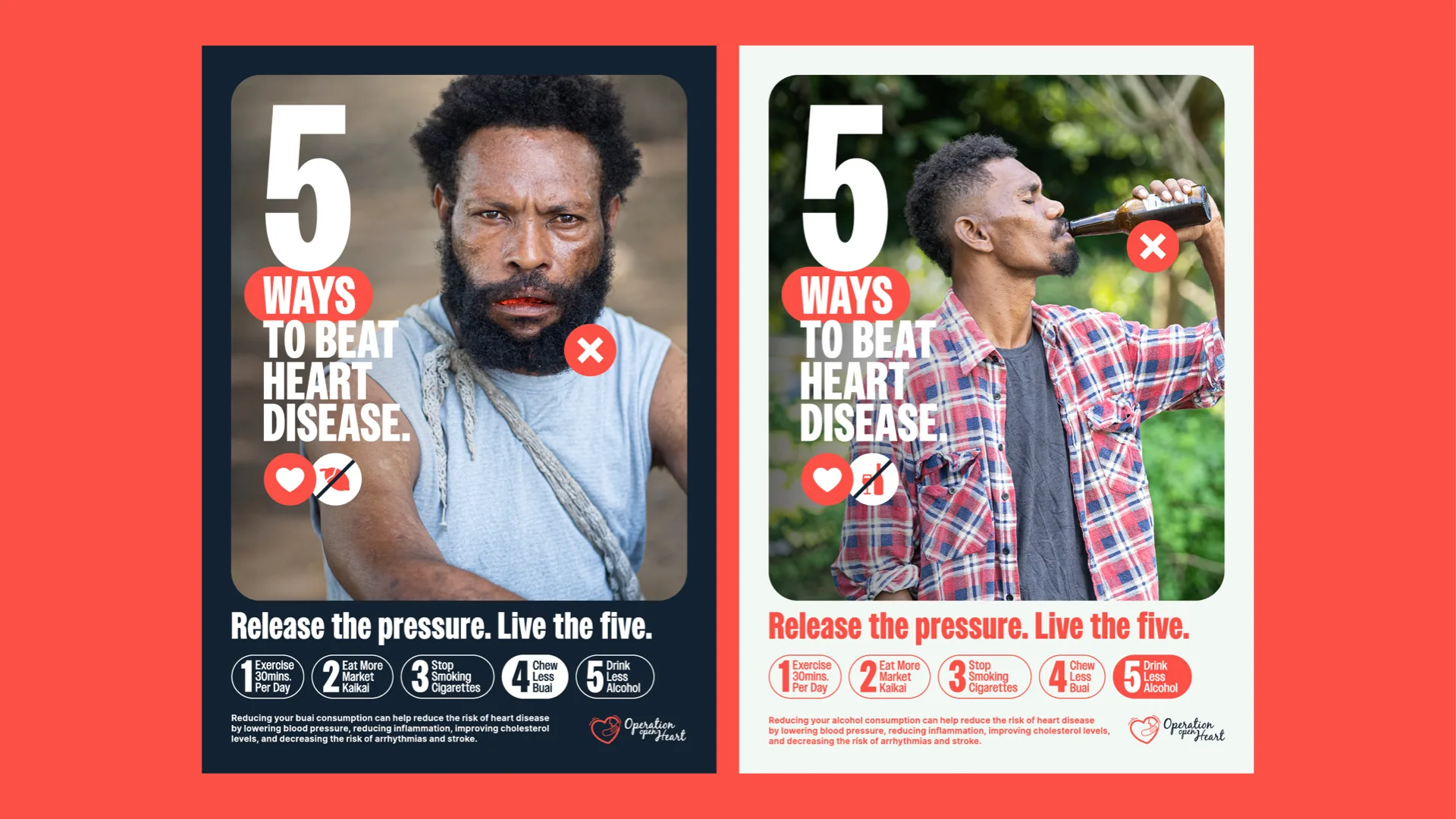
The campaign centres on five simple changes: exercise daily, eat more market kaikai, stop smoking, chew less buai, and drink less alcohol. We paired each with bold iconography and real Papua New Guinean faces. Every image was chosen to feel local and familiar.
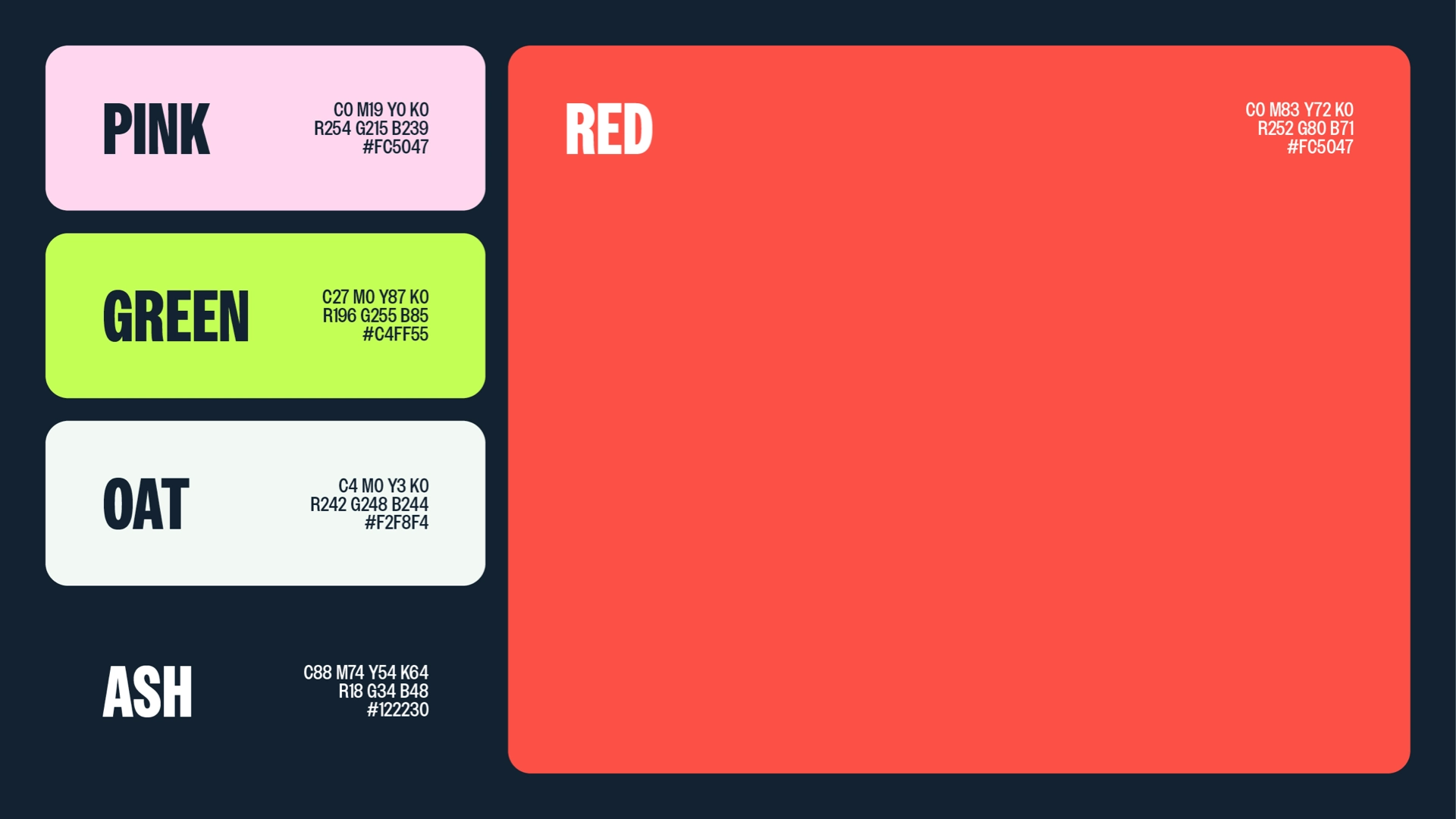
We created a visual system built to cut through. A neon and red palette grabs attention. Rounded forms and simple icons keep it approachable. The identity works across every format, from a phone screen to a roadside billboard, without losing its punch.
The campaign extended into motion and digital. Animated graphics brought the five key messages to life, while a dedicated microsite housed a Heart Health Calculator that lets people check their own risk. See the message, then do something about it.
The work rolled out across outdoor, press, social and digital. Large-format billboards built broad recognition. Social content went deeper on each of the five messages. Every piece was backed by 826 real survey responses across four provinces, giving the campaign hard data where PNG health communication usually has none.
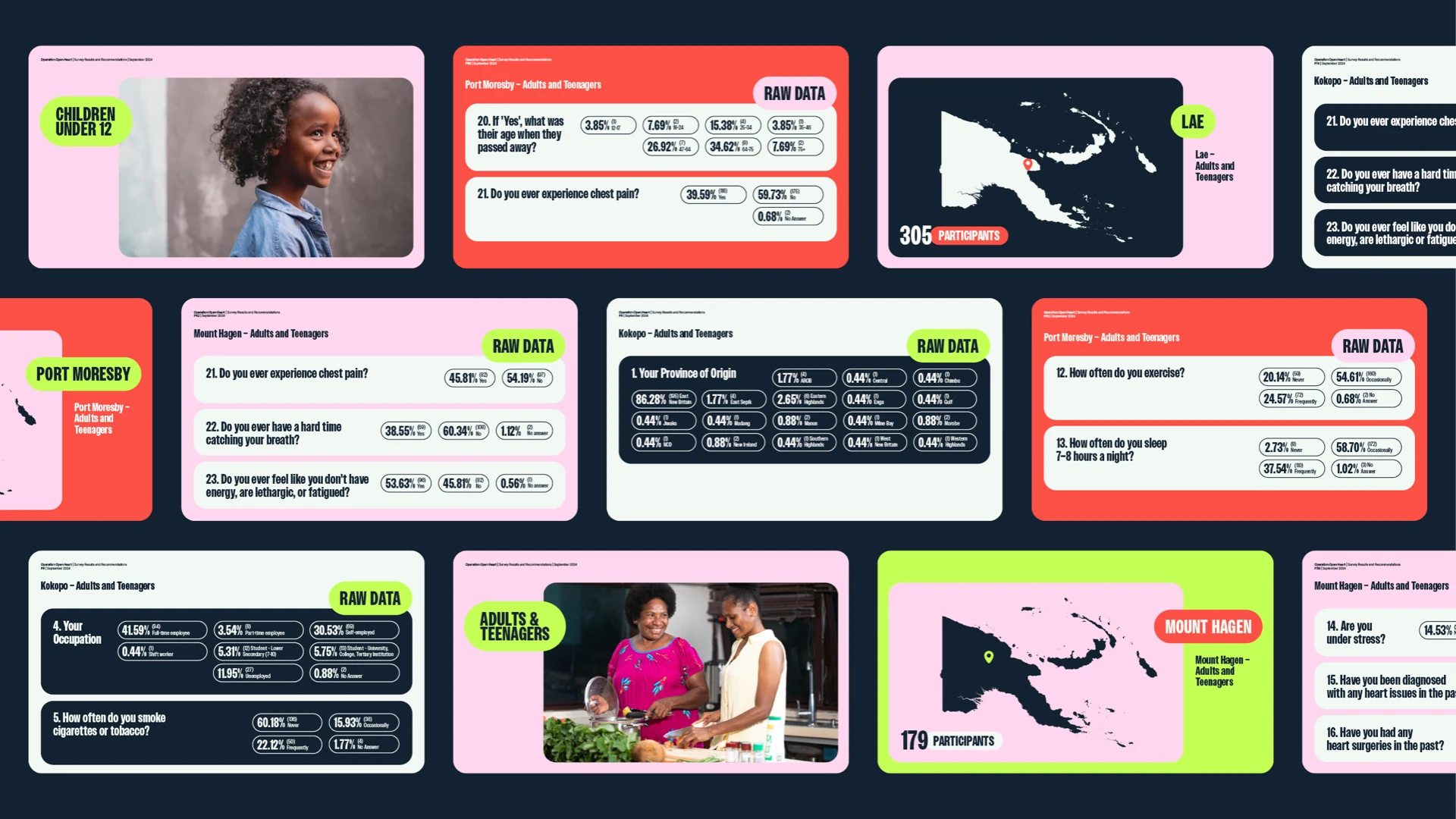
We worked with Operation Open Heart to understand the real state of heart health in Papua New Guinea. The survey reached 826 people across the country, asking direct questions about lifestyle, symptoms, and family history. The results showed a clear picture: betelnut use is widespread, chest pain is common, and most people don’t connect their daily habits to heart disease risk. We turned raw survey data into actionable insights that help OOH target their awareness programs where they’re needed most.
The findings reveal the scale of the challenge. Nearly half of respondents experience chest pain, yet less than 15% have been formally diagnosed with heart issues. Family history runs deep: one in six people has a living family member with heart disease, and 10% have lost someone to it. The survey gave OOH hard numbers to back their mission and shape their approach to cardiac education across PNG.